Friday, 22 June 2018

Create - Reflect - More Teacher Feedback


Now that the year 10 curriculum is nearly completed (I've been chipping away at it for a long time.. like.. all of 2017..) I have shown what's been created to the Tamaki College science department again. It has been tweaked and pulled and pushed around as I gathered more student voice and teacher voice, learnt about SOLO and different literacy strategies, and it's time for a final check before we let year 10 at it!

I asked the science department "which websites were being used in 2017?" and they answered Third Rock, Web of Life, and Sound and Light (these are all my old creations and Third Rock in particular seems popular with students.).

I asked them "is this new format I've designed something the science department would be interested in using?" and they responded "yes, it looks good but it might not meet the new Tamaki College learning area site requirements. Some changes may be required in that area."

To this I shrugged. The swap from Google old sites to new sites is not something I saw coming, and by the time I asked the department to review all of my work there was too much on there to spend time converting. And, to be honest, after an entire year of working on this, I couldn't be bothered doing all the extra work for a formatting niggle that wouldn't affect the teaching or learning.

Graham has since elected to convert my "old" Google site across to New sites as he teaches the new year 10 curriculum, which has spread the conversion work out for him across the year and ensured that Tamaki College has a copy of the site for themselves, should I ever leave the school. So, win-win.

I also asked "looking at what has been created, what changes would you (as experts in Chemistry and Physics, with me representing Biology) like made to the year 9 and 10 learning outcomes and content to be covered, that have been created so far?"

Answers included:

Year 10 Physics - the Electricity and Magnetism unit: Learning outcomes all needed to change to 1. Current and voltage, 2. Circuits and 3. Ohm's law.

Year 9 Physics - teachers wanted the Pressure unit to move into year 10 and the Energy unit to year 9, as pressure is seen as more difficult and is covered in the year 11 Mechanics unit - better to learn it closer to the time.

My final question was "before I start to build the site for year 9, what changes would you like made to the year 9 learning outcomes and content to be covered that I have brainstormed?" 

Answers included:

That the two year 9 units titled Particles, and Matter, need to always be taught together as they support and complete the learning of each other.

In the Particles unit learning outcomes needed to change to: 1. Elements, 2. Atoms and 3. Mixtures.

Year 9 physics was also adjusted, so that the Electricity unit includes 1. Static Electricity and Electrons, 2. Current and Resistance and 3. Circuits. This way students encounter circuits and currents across two years and increase their knowledge in year 10.

Shirley also pointed out that the year 9 Forces unit in physics only focussed on two of Newton's laws (I had thought they were the most important for now) but that there are actually three and they should be exposed to that in year 9.

Friday, 15 June 2018

Create - Innovate - Responding to Student Voice


Design of the new Year 10 curriculum has begun and I'm proud to report that one of the five responses from students has now been incorporated, within two of four 'themes' that classes could select to learn for the year. 


The first theme is called Survival (see below) and focusses on designing houses using sustainable materials. It features a reading about the Te Kura Whare by Tuhoe, as well as a Living Building competition, which could stimulate further research and reading (as there are many similar competitions around the world, with some in America focussing on withstanding tornados as the student suggested).


The new survival theme in the year 10 curriculum.


Te Kura Whare Green Building design reading by Tuhoe


The Living Building reading by the Living Building Initiative


The second theme is Building to Live.  In this theme there are two readings - the first is about traditional Maori Architecture by Te Ara (see below) which could prompt students to think about traditional building styles and how they could continue to be incorporated into future designs.


The new building to live theme in the year 10 curriculum


The Te Ara reading that tells the story of Maori buildings from more traditional to contemporary.


Other things that I will try to incorporate into the year 9 or 10 curriculum (based on student voice) are Maori technology - I don't know anything about this and will have to research it! Running a study on something in culture - I feel this could be left quite open-ended and student-centred. Students also mentioned learning about the history and things Polynesian people discovered or invented - this could be tools again but I'm thinking more about the navigation of ancestors to NZ and around the Pacific using stars.

The last idea that students offered up was to include Maori and Pacific scientists or inventors in the curriculum and it got me thinking - all of the scientists we traditionally talk about are old, stuffy, white men. They're not really role models for the students at Tamaki College. We SHOULD be including successful Maori and Pacific academics, scientists and inventors into our junior curriculum so students see that science IS for them, CAN be part of their future and is entirely achievable for them.

So.. stay posted!

Friday, 8 June 2018

Create - Innovate - Affordances of Technology

Manaiakalani ascribes to the learn create share pedagogy, where students are constantly engaging in a cycle of learning, using that understanding to create, and then sharing what they have learnt/developed/created. Also, students might skip ahead to create and learn while they do so!

I personally like this pedagogy because it's a nice simple checkpoint for me during planning my lessons or a sequence of lessons; am I giving students time to process all the new scientific concepts they're being exposed to? What are they doing with it and how are they taking ownership of it? Thinking about learn create share means I can't just be transmitting knowledge and holding all the power; I need to pass it over and I need to do so regularly.

Learn create share also nicely lines up with SOLO. Learning is unistructural and multistructural, maybe even sometimes relational depending on the learning process; creating often requires relating ideas and creating is definitely an extended abstract process as the learning takes on a new form.


Anyway, I need to consider learn create share while I think about changing the junior curriculum.

How can learn create share and the affordances of technology help our new junior curriculum:
  • assist teaching conversations
  • increase visibility
  • provide cognitive challenge
  • provide scaffolding
  • engage learners
I think the answer to this lies in structuring the new junior curriculum around SOLO taxonomy, where learning outcomes are phrased as "I can" statements. That way, learners should be able to articulate where they are and where they're going next, and say things like "I need help so I can.." 

Having a clear progression of SOLO levels and associated learning activities will provide ever-increasing cognitive challenge as students move through the SOLO levels of a new scientific concept. Being able to move up and down through the levels should provide both the scaffolding and challenge for learning; move down and be scaffolded if a particular SOLO level is too hard, or skip on and move up a SOLO level to provide challenge if you already "can do/describe" things. 

I think engaging learners will be the hardest thing. As with committing to any one framework or any one learning style, this can lead to the loss of novelty and excitement! I can try to plan varied activities and practicals as often as possible, cultural links and links to life, etc, but I think it will often be down to the teacher to spot if students are becoming disengaged and their class needs a bit of 'spicing up' or offline variation etc. 

Friday, 1 June 2018

Learn - Research - Teacher Voice


I surveyed Tamaki College science teachers to find out what specific learning outcomes they would value students learning in Year 10 from their special subject areas. I had the best response form Jay (our Head of Department and Physics specialist) who contributed learning outcomes for Waves, and also for Electricity and Magnetism. Shirley, Tamaki's other Physics specialist, also logged onto the document and concurred with Jay's suggestions.

The link to the Google Doc is here, and I have included a screenshot of the science departments' responses below:


This will help me shape the year 10 curriculum by including areas from the NZC that teachers feel students need to arrive better prepared in.

Friday, 25 May 2018

Learn - Research - Student Voice - Culture in Science

The survey that I gave to sixteen year 9 students at the end of 2016 revealed some great possible cultural/science connections from the minds of Tamaki College's young people. 

In the survey I asked them: 


While most students wrote 'idk' (student-speak for "I don't know), here are the pearls of wisdom gleaned from the survey:

When asked "can you think of any way that science could include more Maori culture/beliefs into any of their topics?" three students responded. Here are their answers (in exactly their words):
  • We could learn about how Maori people created primitive technology and how they used them.
  • To run a study about something in the culture?
  • We can make Maori traditional stuff into useful equipment. 

When asked "can you think of any way that science could include more links to Pasifika culture/beliefs into any of their topics?" three students responded. Here are their answers (in exactly their words):
  • We can make stronger houses for Islanders at the islands so when tornadoes come they won't have to keep rebuilding it.
  • We could learn about history and things that Polynesian people discovered or invented. 

I will take on board these ideas as I begin to develop the junior curriculum.

Friday, 18 May 2018

Learn - Research - VTaL and Relationships

Hinerau's COL inquiry focussed on the design and implementation of VTaL - visible tracking and learning.

For me, the main takeaway from the inquiry was that students should at all times be able to see where they are, what they've done, and where they're going in the future. Hinerau used Class Project Task Lists to achieve this and she reviewed the tool at the end of 2017.

Students reported the tracking sheets kept them on task and they know what they haven't finished in class and what they're doing the next day - hear feedback from the students here.

This is different to how I've used tracking sheets in the past, which I've used as a way to have quick links to all students' work in one place, track their completion, identify an idea of their achievement, and also ensure that I'm giving regular and equal amounts of digital feedback to all the students in my class.


Students have access to this and can view their progress, feedback, and explore other students' work - but there's no future pathway visible on the tracking sheet. Instead it's available on workspaces.


One thing that is required for VTaL Class Project Task List is that all learning tasks/experiences must be established and laid out at the start of each unit, so students can see their learning pathway and move ahead if they want to extend themselves. This requires a lot of organisation!

If I was to use a VTaL tracking sheet with the new junior curriculum that I will develop it would have to still afford flexibility for students to engage with the curriculum in different contexts; therefore, any tracking sheet would have to match the curriculum rather than a theme, or be general enough to adapt quickly.


An of course Noelene, who is our Tamaki College relationship and behaviour wizard (fairy?) included a mixture of literacy strategies, VTaL tracking and data sharing, collaboration on and offline, choice, and the use of SOLO taxonomy... but the main point I took away from reading her 2017 COL inquiry is the importance of genuine relationships and a connection between school and whanau.

Noelene found that:

  • If data is being collected then it should be shared with students too, and they should have the chance to process and respond to it as well. 
  • Constant reinforcement from the teacher and a consistent message of belief and support from home and school helped to raise Maori learner achievement; whanaungatanga.
  • That all the planning and organisation and thought in the world can go into planning learning but sometimes it's worth just having a bit of fun to re-engage students in their learning!

So my final thoughts as I close down all the 1000 tabs I have open right now is that whatever I do to the junior curriculum after this; whatever SOLO-formatted, literacy-focussed, science-skill-building, integrate-able, thematic, tracked learning programme I design for our year 9's and 10s - there's something that I can't plan for..

The need for a caring, thoughtful, adaptable, fun teacher to be forming relationships with students and guiding them through the junior science programme! Relationships are key and it's not something we can really inquire into and force people to do. The individual teacher will always have a massive impact on our junior students' learning and enjoyment of science.

Friday, 11 May 2018

Learn - Research - SOLO Taxonomy from 2017 COL Inquiries

SOLO Taxonomy was written about in 1982 by Biggs and Collins, but since then Pam Hook seems to have taken the reigns and launched it into classrooms in the 21st Century. SOLO provides a "simple and robust model" to describe different levels of understanding.

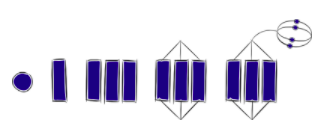
The image below shows prestructural understanding (you don't know much yet and that's ok), unistructural understanding (you know one thing about the concept), multistructural (you know a few things about this idea), relational (starting to understand the links between and across ideas) and finally extended abstract thinking (where you can take what you know and apply it in a new setting, or create something new).


Tamaki's SOLO Queen has to be Karen. She has a whole segment on her blog dedicated to the SOLO resources she's created - both general frameworks and design-specific ones! She also worked with Brent Dunn from the Maori department to design a Tamaki College-style SOLO poster in Te Reo.


One of Karen's earliest activities was to get students first describing at the unistructural or multistructural level, and then she continued on with a Google drawing that made 'describing' at each SOLO level very explicit and clear. I actually found the Drawing in Karen's trash through one of her links - she's obviously moved beyond her earlier attempts and as I continue exploring her 2017 posts I'm sure I'll come across even cooler examples!

Ah here we go! An upgraded model. Karen has removed the 'include evidence' column to streamline student's work process and included a column titled 'target vocabulary' to make her subject-specific vocabulary more explicit.

I can see Karen constantly reflecting as I explore her posts. The one I'm reading at the moment says "I looked at the support I had included on their class site [for evaluating their final poster designs] and decided it was not good enough." Onya Karen, you're so honest! She decided to upgrade the support so students write an analysis at increasing depth of SOLO levels (see image below). Once again she's included key vocabulary explicitly, and also given sentence starters to support lower-ability students.


Karen also used SOLO hexagons (one of Pam Hook's ideas) to collect (multistructural) and get students to identify links between (relational level) her new Year 9's vocabulary around a clock they were analysing.

Noelene also used SOLO taxonomy to break down her Level 1 standards for her learners, such as in the multivariate statistics standard and again in the algebra standard. This made it really clear for students about what they needed to be able to do to achieve, and how a deeper understanding would lead to better grades.

I really like the clarity that using SOLO as a learning framework affords. Students can identify what they can and can't do from the framework, and it also makes 'beginning at the start' acceptable; being at the prestructural level of a concept is normal at the start! The SOLO levels also really nicely align with the depth of thinking and writing required in NCEA for Merit (relational) and Excellence (relational and extended abstract) work.