Showing posts with label COL Inquiry. Show all posts

Sunday, 12 May 2019

Week 2 - Creative!


Goals:
To make time for my mental and physical health. 
To carry out all my roles (teacher, HSA director and Across Schools CoL) to the best of my ability. 
To support staff wellbeing. 
To actively maintain a positive personal outlook. 
  • Visits to the gym this week: One on Saturday again. The first-week excitement of joining a new gym QUICKLY wore off. 
  • McDonald's eaten: one BLT and coffee when I was running so late I wouldn't get a chance to heat my porridge before my fully booked day began. 
  • Casual sports games played this week: 1 game of touch again - I didn't stay to fill in for random teams because Kurt was patiently waiting for me to get home to watch Game of Thrones!
  • Books read: I'm slowly slowly working my way through the book Karen gave me at our Week 1 Holiday Book swap!
  • Teaching highlights: 
    • My absolute favourite was the double-period study session with Year 9. I had created a series of revision activities to help them study for their upcoming test, and they ABSOLUTELY LOVED bringing it up to me, getting feedback and then getting to colour in another rectangle to show their progress on the board! The majority of the class worked incredibly well through a full 95 minute block of time.
    • Year 13 used play-doh to illustrate one of three delivery methods for getting CRISPR into cells. They're presenting them to each other in class tomorrow. 

    • On Friday last period I asked Russell to come and help me run a busy practical lesson with Year 9 to reward them for their fabulous study and sitting of their first science test. It definitely required 2 teachers. We also had my student teacher Caitlin helping to supervise, and Chris the teacher aide there for safety too. On one half of the room we had three stations; dry ice rockets, dry ice bubbles and dry ice target-practice. In the other half of the room we had elephant's toothpaste! All the students absolutely loved it. I haven't trusted them with chemicals since they showed they couldn't listen to safety instructions during the tectonic-plate sandwich debacle of '19. It was time to give them another chance - and they did MUCH better this time around.


  • CoL things: I'm waiting on permission to speak to a few teachers around their teaching of reading comprehension, but need to follow the right procedure to do so. 
    • I ran a 'create' session in the Monday PD which 3 people attended. We all created educational songs. We quickly recorded Vaughan's one about language features. 
  • Health Science Academy: This week I ran our second parent fono evening, which was attended by Tuliana, David and Ola from the WDHB, two guest speakers - Sela and Agnes - three parents/caregivers (one I hadn't met before, so it was lovely to connect) and three students, two of whom gave speeches! It was an enjoyable night. I just wish more parents had made the commitment to come. One thing I learnt was not to run it on a Wednesday in Term 3 as it clashes with church events, and to call earlier - probably even before sending home letters (that seem to remain in the bottom of student's bags)! 
    • I also recorded Leo and Makoni's speech, in the hope that it would help them to gain 4 Speech credits in English. They both spoke for over 4 minutes and were both confident to speak off-speech spontaneously. They were engaging and entertaining! I've sent the video off to their English teachers :) 
  • Teacher wellbeing support: this week we had a shared lunch on Friday, and about... 12 teachers contributed food? Everyone enjoyed it. Will have to repeat in Term 3. 
  • Gratitude emails sent: tagged Graham in a facebook post telling him he's doing a good job both 'Dadding and teaching.' 

Sunday, 5 May 2019

Week 1 Term 2 - Back At It Again


Goals:
To make time for my mental and physical health. 
To carry out all my roles (teacher, HSA director and Across Schools CoL) to the best of my ability. 
To support staff wellbeing. 
To actively maintain a positive personal outlook. 
  • Visits to the gym this week: FOUR!! I decided to join a second gym, so now I'm a member of one on each side of the city. Why? And isn't that a waste of money? No because now when I'm early I can go move my body and exercise rather than sit around and eat scones and BLT bagels, which was getting so frequent at the end of the term that it was costing me $45 a week. 
  • McDonald's eaten: zero McDonald's visits this week. Too busy doing silly ballet and weightlifting classes at the gym.
  • Casual sports games played this week: 1 game of touch, but it's 5-a-side so it's INTENSE.
  • Books read: Currently have three sitting on my bedside table but none of them have grabbed me. Taking recommendations.  

  • Teaching highlights: 
    • Two activities with Year 13:
    The first was an introductory research activity into CRISPR (but not actually about CRISPR). It led students to research two famous people related to CRISPRs use or discovery, and a few extra bits and bobs I found interesting. We ran the activity as a jigsaw - two teams, with each person in the team responsible for one part, and then presenting back to their team. These Year 13's really seem to enjoy this format of learning, with presentations at the end. It motivates them to take pride in their segment of the learning and share it to the others.  The activity stimulated curiosity and a lot of really relevant questions being asked, which led on nicely to the next day.

    Here is one group's presentation

    And here is the other's 


    The second activity was end of a double-period the very next day, once there was a lot of curiosity combined with a basic understanding of CRISPR (from the first half of the lesson). 

    Students modelled CRISPR by 'reading' the 'genome' (segments of DNA stuck to desks around the room) to find the 'gene' that matched their own personal 'gRNA' (a strand of RNA stuck to the top of their scissors). 

    Once they found their 'gene,' they used 'Cas-9' (the scissors) to 'cleave' (cut) the double-stranded DNA at that precise loci (location). 

    Then they used the 'template' of a 'healthy gene' (attached at bottom of scissors) to 'knock in a gene' as the cell 'repaired the DNA' (stuck it all back together).


    I also really enjoyed collecting in questions from the class at the end of the period. The next day I shared with them my 'first draft' answers, and asked them to split-screen as they would when creating a 'second draft' of a University assessment (because we all know you don't hand in your first draft - they looked at me absolutely aghast as I said this). 

    Each person was then responsible for 'editing' my 'first draft' into a more succinct and clear 'second draft.' You can see their 'second draft' here. Then they explained and were quizzed on the answer they had just adjusted by a peer. It was a useful activity for:
    ~ learning about an area of CRISPR they were curious about.
    ~ learning how to split-screen (Laite didn't know and thought it was fabulous).
    ~ learning one way they can edit and create a second draft for assessments. 
    • CoL things: I collected student evidence by spending 4 hours interviewing students about their perspectives on reading, and then time after that analysing the qualitative data. Also further analysed PAT results (see previous posts).
    • Teacher wellbeing support: ran the Week 1 book swap again, but this time only Karen and I had books to swap so that was actually a bit sad! 
    • Gratitude emails sent: none.

    Thursday, 2 May 2019

    Holiday Drop-Off in The 31?

    We often hear about 'summer holiday drop-off' in our student's results and hypothesise about what that means, what causes it and how we can overcome it. 

    However! My data analysis has revealed some great news! 

    For the 31 year 9 Tamaki College students who accelerated in their reading comprehension last year, this wasn't a phenomenon. They made progress in their holidays at the same rate as the rest of NZ. It just wasn't as much as they made during their school year, which is encouraging because that means teachers and schools can help and DO have an impact on the students in their classes! :)


    Interestingly, 'summer holiday drop-off' is also not a phenomenon in the averaged reading comprehension results of ANY Year 9 Manaiakalani years who arrived at Tamaki College in the last three years; as you can see, the trend continues upwards from the last Year 8 result to the first Year 9 result. 


    Why might that be? Maybe students are nervous or excited about starting secondary and do some online research or reading over their break! Some might participate in the summer holiday learning journey, but the spread of participants probably include primary students too. The drop-off can't be a function of testing in Primary schools, (that students perhaps aren't prepared for their Term 1 test but do a lot of practice or pre-testing in class before the Term 4 one) because this would show again from Y8 to Y9 as in Y9 students receive little preparation and just head in to sit the test under standard test conditions. In summary - I don't really have a strong hypothesis for why there's drop-off between primary years but not between primary and secondary! 


    If we look at the top graph again, the reason why my inquiry is important is revealed: 


    Individually, each of the 31 accelerated in reading up towards the national mean during their school year. This is shown as an average in the graph above. Then, they have tracked along with the rest of NZ over the holidays to reach their Year 9 score, and didn't drift further away from the mean. This holiday improvement is an average again, as 22 improved on their final Y8 score but 9 dropped.

    The challenge here is "can I find out what caused this Year 8 acceleration?" Because wouldn't it be awesome if they made the same amount of progress in Year 9 and crossed that national mean line!  AND wouldn't it be amazing if whole classes and year groups could manage this, and the Manaiakalani cluster became as good at improving reading as we are at improving writing.

    I don't teach all of the 31 - in fact, I only teach 3 of them. So it's important that I create and share something from the findings of my inquiry, so teachers across the cluster can have a go too!


    Sunday, 28 April 2019

    Monday, 25 February 2019

    CoL Data Crunching

    When I began my year as a CoL teacher I thought that each week I would be able to create and share resources and/or videos of bright ideas about literacy from almost any primary teacher in our cluster to the secondary teachers of my school, as I regarded them all as literacy specialists in comparison to me, (and probably all secondary teachers like me), who always try our best but didn't receive the same formal literacy training during our PGDips as the Primary trained teachers did. 


    However, I've had my reigns pulled in. And that's not a bad thing at all, because what it means is that I'll be more targeted and scientific in my approach to sharing literacy strategies, instead of charging around like a bull in a china shop. On the other hand, it does mean I have less tangible help to deliver to my secondary colleagues each week in return for my time out of class each week. I'm very conscious of this. Everything I do this year will be through the lens of sharing what I learn to help others, and with a focus on literacy and science. 


    So here is the outcome of the first four weeks of my year: 
    • I've had three meetings about the steps that I must take to walk the best path into schools of the cluster, and also to shape and focus my inquiry. 
    • I've been working with Aaron and Kenichi from Woolf Fisher to access the past data of the Year 9's who arrived at Tamaki College this year. 
    • I conducted data analysis and creating a presentation to share at the first CoL meeting of the year. 
    • I presented the start of my inquiry to the CoL meeting and have asked Kathryn for time to present at the next big staff meeting, to try and share more than just via this blog. 


    Here are the findings around Writing and Reading Comprehension of students who arrive at Tamaki College from schools in the Manaiakalani cluster:

    • I have identified that Writing is a great strength of the Primaries. 
    • Reading Comprehension is an area that all Manaiakalani schools can improve. 
    • 111 of the 149 Year 9's who arrived at Tamaki College did not make accelerated progress in Reading Comprehension towards the norm during Year 8. 
    • Only 7 of our new arrivals are working above the norm for NZ in Reading Comprehension - meaning that acceleration in this area is vital across ALL years, as we're all playing catch-up together. 
    • 38 students arriving at Tamaki College DID make accelerated progress in Reading Comprehension! 
    • Some of that progress was really significant - Trent made 17.9 points of improvement in his PAT scale score for Reading Comprehension, and the norm improvement was 5.28! 


    Friday, 1 February 2019

    Quick Summary from Week 1

    We're back into it again for the year!

    It's Saturday morning at 4.24am and I couldn't sleep because there were too many emails left unsent. Usually I'm good at switching off but.. apparently not tonight.

    This year my goals are:

    To make time for my mental and physical health. 
    To carry out all my roles (teacher, HSA director and Across Schools CoL) to the best of my ability. 
    To support staff wellbeing. 
    To actively maintain a positive personal outlook. 

    Here is the snapshot update on how that is going:

    • Visits to the gym this week: 0
    • McDonald's eaten: 2 kiwiburger combos.
    • Casual sports games played this week: 2 games of tag.
    • Books read: finished the third Orphan X on Tuesday night. 
    • Teaching highlights: 
      • Building and using a 'reading corner' with a large mat for Year 9 to gather on at the start of lessons. I'm trying to give an introduction, set expectations and have discussions with them there at the start of the lesson. There's a lot of them though. They overflow.
      • Creating a booklet for 'introduction to science' for the Year 9's which they appear to have thoroughly enjoyed so far!
      • Marking that booklet and using the small amount of evidence in it to create literacy groups named after ancestral waka. 
      • Creating 5 different versions of the same reading for those literacy groups.
      • Getting feedback from the three (of 10, the rest were at a spontaneous leadership course) Year 13s present during Thursday and Friday: "this makes sense Miss, this is all good." 
      • Running a 'pads and tampons' investigation using a very poor-quality fake blood that I whipped up with gelatin, cornflour, water and red food colouring on the very first day of biology with my Year 12 class, which is a class of 25 girls! 
        • Results: tauira were engaged, surprised, and thoughtful - they learnt that super pads absorb a lot more (about 20mL more) than super tampons.
        • One group created a striking visual of tampon absorbancy as the tampon expanded and blocked an upside-down measuring cylinder full of fake blood.
        • Another group tested different brands of liners stuck on paper towels, and found out which brands would leak first. The thickness of the best liner seemed to also be assisted in preventing leakage by imprints of flowers in the pad. 
        • I wish I had taken photos!!
    • Had a CoL meeting and came out knowing what data I need to track down to begin with, and knowing I have to think of a project and inquiry outline before the next meeting (Valentines Day). 
    • Teacher wellbeing support: ran a "Holiday Book Swap" in the staffroom on Friday afternoon.
    • Gratitude emails sent: 4, subject line is simply :)

    Tuesday, 13 November 2018

    Share - Model - Guide

    Now that the results are in for whether my intervention was successful (in some cases, yes definitely,
    in other cases sort-of, and best of all - no one LOST any words!) I can share my intervention all in one
    place in case anyone wants to “borrow” it for their kiwi learners.


    Plan for Introduction to NZ Volcanoes
    and Auckland Hotspots


    3 minute vocabulary test


    Hook to topic

    I turned off the lights, shut the curtains, cranked up the volume as loud as I could and sat the students
    close to the screen and to each other, and then played the full 8 minutes of this Pompeii eruption.


    Class shares a video, gif or fact they find interesting.

    I also did a quick demonstration where 4 students got to “make volcanic eruptions” with food colouring,
    baking soda and vinegar lava spewing down the side of paper “volcanoes” just because they kept
    bugging me about it! I did a larger one with “elephant’s toothpaste” at the end.


    Interactive Reading

    Text about New Zealand volcano Lake Taupo here


    Interactive guide to the text here

    Supporting visual video here if students want to watch it at the end of the text.

    Kahoot to review at the end here - check what students took from the reading!


    Vocabulary Instruction

    Introduction to vocabulary visually here


    Crossword to solve here


    Animating a Hotspot

    A video to visualise hotspots here (pretend they say Auckland instead of Hawaii).

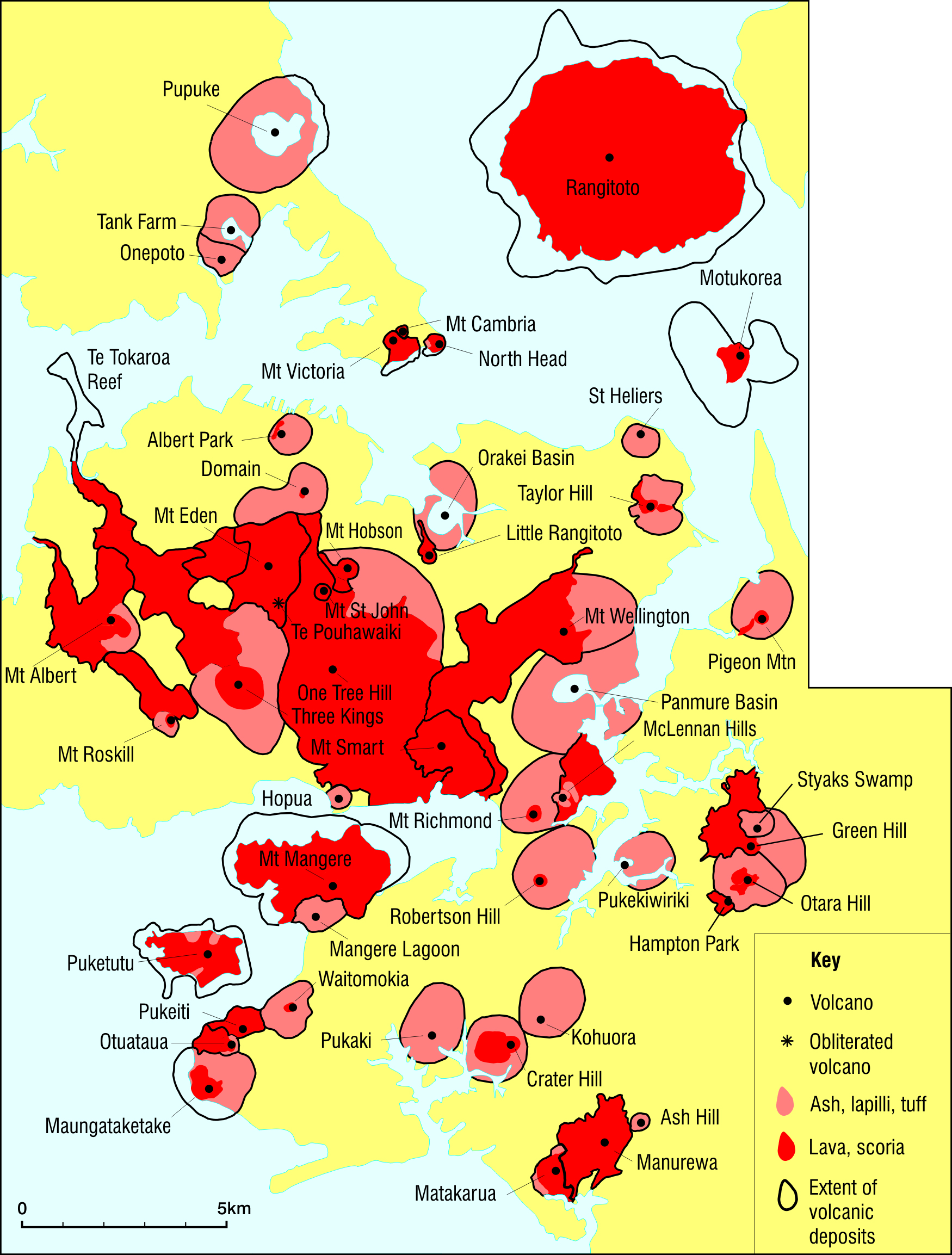
    Decoding a diagram of Auckland volcanoes and teacher demonstration of how to use a ‘key’ here.

    Captions to animate here.

    Example created by class here, if you want to see one.

    Video of class completing this learning sequence here.


    Gamified writing about an Auckland eruption

    Instructions for this activity here.


    Links to examples from the class here

    Prizes given out one Friday afternoon for all students who scored over 20.


    3 minute vocabulary test.

    Share - Publish

    Comparing pretest to post test vocabulary.

    Students were given the same instructions for both tests;
    simply “you have 3 minutes to write down as many words relating to volcanoes
    as you can.” I encouraged them to keep it a secret from their neighbour and
    to just use their brains. I tried to turn it into a bit of a game!

    Three minutes was the perfect amount of time. Some had run out of words and
    only a few were still writing furiously at the end, and that only happened in the post-test!

    I also took some Kahoot data near the start of my interventions - after the interactive reading:

    Kahoot scores from the middle (including literacy questions about the Lake Taupo interactive reading):

    Interestingly, Student 2 only scored 41% in the kahoot. Student 2 did not enjoy the
    interactive reading activity before the kahoot at all (questions were based off the
    reading), but DID appear to enjoy the other interventions, particularly the crossword
    that linked vocabulary to definitions and the feedback from me that went along with that.
    I guess that speaks to the need to revisit content over a longer period and in different ways.

    Student 2 has made the biggest vocabulary shift in both quantity and quality of
    volcanic vocabulary (as you will see), but their kahoot score indicates most of the shift
    happened after this interactive reading.

    Click here to open the comparison of pre and post test data.


    TLDR summary of data: so far 2 students have improved in both quantity and quality of volcanic vocabulary. The other 2 have dropped slightly in quantity and the quality of words remained the same; they omitted some from pre to post test but replaced them with roughly-equivalent quality scientific volcanic vocabulary. Two more results weren't collected due to extended absences.

    Monday, 12 November 2018

    Create - Try New Things

    The first thing I tried that I would not usually do is spend an entire 50 minute period NOT learning science
    but instead trying to HOOK students to the topic!


    3 minute vocabulary test - data on paper. I will compare this to a similar test done at the end.


    Interactive Reading

    I created a text based on the transcript of this video here, and then I went through and made a few 
    volcanic vocabulary tweaks. Next I made an “interactive reading guide” to accompany it, which included 
    instructions on HOW to read the text. This included instructions for things like scanning the text at the 
    start for clues in the title, bold words and images before making a prediction about what they might learn 
    in the text. It also included how many paragraphs to after they had done that and then where to stop, 
    mini-activities like drawing a sketch for four of the sentences, to stop and watch a video to watch at a 
    certain point, to summarise a paragraph, find evidence in the text for the meaning of two words (one 
    volcanic, one not), questions to answer after a paragraph and then to share their answers in pairs etc. 


    This is my reflection from that activity:

    ~ It was glorious, three girls in particular were engaged throughout. They did some extra research and 
    reading about taniwha of Taupo and found images of carvings of the guard dogs. They also found 
    another guardian carving of the lake. 

    ~ Other students in the class engaged well with the visual of the video supporting the text and said 
    things like ‘woooaaah’ when they saw the mountain collapse and the lahar powering through.

    ~ This is the second time I’ve made the class do a large reading and it worked 100x better in pairs rather 
    than in when we did readings groups of 4 with the clarifier and questioner roles etc. 

    ~ The interactive reading prompts seemed to be set at appropriate levels for this class.

    ~ There were three students in particular who didn’t really engage as much as the others; two were 
    having an “off” day and one is difficult to engage, but it’s wonderful to see when they do!

    ~ Taking a full double to really engage with the text definitely paid off. 


    Vocabulary Instruction

    The research I got this from said my natural instinct might be to front load students with definitions and 
    to be honest I nearly did. But I caught myself in time and instead I included gifs and videos in the 
    document before each definition to illustrate the vocabulary (and hopefully pique their curiosity) before 
    they read about it. The next step was to complete a crossword (solving the clues, using the vocab).


    This is my reflection from that activity:

    ~ I definitely delivered this activity wrong. I gave students both the volcanic vocabulary document AND 
    the crossword at the same time - foolish! As one student pointed out, “Miss you should have just given 
    us the document first.” 

    ~ Students were in a rush to answer the crossword and didn’t have the skimming/scanning strategies 
    available to flick back and forth between the crossword and the document full of answers. 

    ~ The three students who were not at all engaged by the interactive reading were FAR more engaged 
    during this activity. 

    ~ Most boys seemed to tolerate both activities but didn’t really “get into” either of them so far.

    ~ One student requested that next time it be a wordfind not a crossword, so I need to think of a way to 
    upgrade the learning value of a wordfind. Maybe matching found words to definitions!


    Physically modelling the relationship between vocabulary in a story

    This one didn’t really involve a literacy strategy specifically described in my literature review -  the 
    activity was to animate the concept of a hotspot; they had to interpret the volcanic vocabulary given to 
    them in ‘captions’ and model it in a play-doh animation.


    My reflection from this activity:

    ~ This activity would have gone better if I had one more lesson previously to establish some
    understanding of hotspots. As it is I tried to squash this into one lesson; a quick video about hotspots, a
    diagram showing all of Auckland’s 52 volcanoes to amaze them and link the video to their lives, and then
    I explained it all again. 

    ~ Then I had to deliver some technical instruction around how to physically make an animation and what 
    the expectations for that were, which chewed up more time; we watched a video I’d previously made for 
    Y11 about stop-motion animations and I showed them examples of hotspot animations from previous 
    years. 

    ~ Students were definitely engaged during this lesson but there wasn’t enough of me to go around. 

    ~ Some groups required more guidance and time than I could give them, so consequently not all groups 
    finished their animated interpretation of the captions I’d given!

    ~ This one engaged the boys a lot more, but they required a lot of support and I didn’t get to help all of 
    them.


    Gamifying writing

    I got this literacy strategy from Matt Goodwin (Pt England Primary) after a discussion on literacy 
    instruction. He suggested turning writing into a competition and assigning words or language features 
    points or deductions. He also clarified for me what a narrative, recount, and explanation were, and said 
    that the best writing in the real world is a combination of all of them. 

    This activity does also involve something that I took away from Dr Jannie van Hees’ second COL 
    presentation; to get students to really focus in on one thing when they watch a video or do a task. I 
    turned off the light, cranked up the volume and got students to watch an animated volcanic eruption in 
    Auckland three times; first to think how they would describe what they saw and felt using adjectives, then 
    to focus on how they would describe what they saw using scientific vocabulary, then finally to think about 
    the processes happening under the ground that they couldn’t see. Then I got them to write a short story 
    describing the eruption; they could earn points for different writing features and vocabulary that were 
    included.


    My reflection:

    ~ Everyone seemed to enjoy this activity, bar one boy. One of the other boys who had been disengaged 
    in other activities jumped right on board this one as it involved blogging, which I’ve noticed he’s both 
    good and prolific at - he’s had almost 5000 visitors to his blog! 

    ~ The one boy in particular who did not engage is consistently resistant to getting started on work, and 
    this is a trend in his other classes as well. Hopefully a culture of writing and learning can be built in the 
    class and he gets swept up in it. Positive peer pressure for learning!

    ~ Lots of students asked me to check their writing as they were going; they were both proud of what 
    they’d come up with and wanting feedback on how to include more of the vocabulary/score higher points.

    ~ Students had read my comment/their score on their blogs by the time they arrived in class the next 
    day!

    ~ One student mentioned she had also visited other students’ blogs; particularly the boy who had beaten 
    her by one point in the competition!


    3 minute vocabulary test in exactly the same conditions as the pre test - the same desk layout, the same
    refill paper, the same thick colourful pens, the same simple instructions, the same timer projected on the
    board, the same prompts to hide their work and encouragement “just keep going!” as they started to fade
    at the end. Then I let them do a summary crossword of the entire topic at the end, because they had
    enjoyed that. We went through the answers at the end.

    Sunday, 11 November 2018

    Create - Make a Plan

    Today I’m sharing a graphic of my first round of interventions.

    As I go through my inquiry the first half of the bubbles will remain the same (because my achievement challenge and outcomes are the same), but the interventions, measurable outcomes and ‘what it looks like’ will change..


    Click here to open the image above. Inside it notes the interventions include:

    Interventions Round 1:

    • Paired reading.
    • Interactive/guided reading of scientific texts with cultural links as well.
    • Revision kahoot after the reading.
    • Vocabulary instruction and crossword.
    • Modelling of the relationship between new vocabulary.
    • Gamification of writing about a volcanic eruption.

    Friday, 2 November 2018

    Learn - Reflect

    Literacy tests used in Manaiakalani and why I can’t use them in my inquiry

    STAR tests - Supplementary Test of Achievement in Reading.
    e-asTTle tests.
    PAT reading.
    SEA - Writing Vocabulary. In 10 minutes how many vocab words can you write down on a piece of
    paper? It’s a measure of fluency - do you need to devote time to work it out or can you just “go”?

    These are all legitimate measures of reading and writing that are pretty universally accepted in NZ
    and in the case of PAT, around the world.

    However for me they are not useful to measure improvement of literacy in science (hopefully caused
    by any intervention that I do) as I only see my year 9 students three times a week for a total of 200
    minutes! That means they are spending a heck of a lot of time with other teachers; in English, reading
    for 20 minutes a day during the school’s AR programme, and then of course there’s all the time at
    home where students could be doing anything at all - they could be reading novels for 5 hours a day!

    I need to come up with my own measures of scientific literacy!

    I'm thinking about 3 minute scientific vocabulary tests or 5 minute paragraph writing about a topic -
    leaving it absolutely wide open. I could either give identical instructions for pre and post tests, or even
    return the pre-test at the end to see if they can improve upon it after the intervention.

    Wednesday, 31 October 2018

    Learn - Research - Professional Development

    During the holidays - on my birthday - I went to the WTE National Writing Conference and the keynote in the morning alone was worth getting up early for.

    I took all my notes on a Presentation, which is here for you to view below or view at this link.


    I absolutely have used these sentence-types in class. With the juniors I ran whole lessons around casting sentence types, to try and improve their writing.

    Here's one lesson I ran on precision writing in science - this presentation linked to this set of activities for students.


    The other thing I was absolutely blown away by was the way that we present students their assessment tasks. We've been giving them THOUSANDS of words to decipher and try to work out what to do before they even begin writing the assessment.

    At the writing conference we sat down in groups with a real 1800-word, Level 3 PE task and all tried to work out what it was asking us to do, and how to get Excellence, and which parts were important.

    Then Ian presented us with a single A4-sized task. It had exact word limits and included clear instructions on what students must include to gain top grades. We didn't have to guess what was meant! Why does it have to be a mystery what we want students to do? When he took his single A4 sheet to an NZQA moderators meeting (there were 40 of them there) they were bamboozled - they thought that's what everyone was giving students! The TKI tasks are not meant for kids' eyes!

    Ian said the best way to make these amazing tasks is to write your own Excellence exemplar, and then see how many words you have apportioned to each section of the task. Set students a word count (as they would have in University, anyway!), and provide headings for each section. Provide clearly worded prompts about what to include. You can see two examples of this that he provided, in the presentation above.

    Here is one that I wrote myself for Year 13