Showing posts with label science. Show all posts

Sunday, 31 March 2019

Week 9 - The End is Nigh


Goals:
To make time for my mental and physical health. 
To carry out all my roles (teacher, HSA director and Across Schools CoL) to the best of my ability. 
To support staff wellbeing. 
To actively maintain a positive personal outlook.

  • Visits to the gym this week: Thursday night between HSA Leadership camp days, when I felt stress-free enough to take an hour for myself.
  • McDonald's eaten: Three trips again. None this coming week, I promise.
  • Casual sports games played this week: None AGAIN - and it's starting to just slightly affect my self-esteem now as I feel I put on weight when I don't play during the week.
  • Books read: No books but I read a magazine article for fun about Duchess Meghan Markle. She seems so sweet :)
    • Teaching highlights: 

      • Year 12 are writing their assessment so there is little exciting happening there.. 
      • I only taught Y9 once last week because of the HSA trip on Thursday and Friday, and that period was just a massive uphill battle on Period 6 to get them to write compare/contrast paragraphs about hokey pokey that we made Friday P6 the week before, and lava/pumice. I had even taken the time to record their instructions, so the low-reading-level students could listen and still be able to learn:

      • Year 13 have been stretching their brains and wrestling with the concept of Quantitative Trait Loci (QTL) analysis near the end of their learning about selective breeding. We had a nice double-period of slowly moving through a video, creating brainstorms, and sitting together in small groups and talking. It wasn't a particularly inventive lesson, just patient and collaborative. 
    • CoL things: Half of my COL time this week was taken by an HSA directors meeting. I still need to go and interview Y9 students who made accelerated gains in reading during Year 8, but this Monday/Tuesday we have student achievement conferences and next Monday/Tuesday they have Y9 camp so alas, that must wait till next term! I will try to conduct some research into more reading comprehension interventions I can implement with the class :)
      • HSA things: Period Zero numbers dropped last week back down to 5, but I am hopeful that after the Student Achievement Conferences these numbers will increase. 
        • I took the class to a two day Leadership Conference on Thursday and Friday, which was undoubtedly the highlight of their week (and my teaching-week too)! There, students met other Y11's who will be travelling with them through secondary and into Health Science training at University. Here is the video from the trip:
      • Teacher well-being support: this week I taught 7 staff members how to make scones! Glynis even went home and made some more over the weekend and sent me pictures :)

      Showing the way of the scones..

      Ladies ready to bake! (Alex taking the photo).

      Glynis' weekend scone attempt - looking fluffy!
      • Gratitude emails sent: back to none again. Oops. 

      Thursday, 6 December 2018

      More Literacy with Year 13

      I just published my last Class OnAir episode for the year! I had great fun editing this one because there was just so much quality discussion occurring between the girls in the group! 

      The premise of the lesson is to have small groups of students co-construct a paragraph before sharing it to the class on a big whiteboard. This allows them to share ideas at first in the safety of a small group, and then have the anonymity of being in a group as their shared work is 'judged.' The process allows them to share and clarify their understanding together. 

      This is a literacy strategy that Marc Milford, our TC literacy specialist, shared with us during a staff meeting at the end of Term 3.

      Almost no resources were required for this - a word bank up on the board, some pens and paper, and a few big whiteboards and whiteboard markers.

      I chose to front-load the biological vocabulary and speak about the words in context and in relation to each other, rather than starting with dry definitions that meant nothing to students. 

      Please enjoy their discussions!


      Monday, 3 December 2018

      Learn - Create - Share - Year 11

      I have a lovely, lovely Year 11 class this year. They're an absolute mix of abilities but most of them seem really driven to achieve. At the start of the year I asked them which standards they would like to do, and which topics from the junior years they felt they were the best at. Almost unanimously the class said "volcanos." 

      So at the start of Term 2 we began the Surface Features of New Zealand assessment. I did only one week of teaching about hotspots and subduction, relying heavily on what they could recall from their junior years and hoping to give them enough of a reminder to cope with any online readings they came across. 

      My focus for the internal was to build confidence and abilities in online research and report writing. To do so I decided to model the process from start to finish, and show students the skills required for report-writing in a way that they could return to and rewind whenever they needed. 

      We spent a full two weeks doing a half-sized practice on Surface Features in America (Mt Rushmore, Yellowstone National Park, the Grand Canyon). 

      Students had access to a series of screencast and narrated videos where I tried to speak my thoughts out loud as I researched and wrote:


      I used the idea of checkpoints, rewards and punishments from my earlier PD on writing with Joseph, and while it was in place for all students my particular focus was on the boys in the class. I gave them some choices in rewards, and also let them honestly choose consequences that they wanted to avoid. For some it was chocolate or a phone call home, others wanted lollies and to (avoid) being sent to their Dean. 

      Every single day I left feedback on every single practice essay, and I updated every single one of their checklists so they could see what they had done and where their next step was. Some students started to do this on their own towards the end of the practice time. 

      For a few students who were really struggling, I made personalised screencasts of how I would go about continuing to craft their essay from where they currently sat. Here is an example below: 

      Click here to view the full screencast made for one student as they composed their practice essay.

      I don't really have a measure that I can use to show that every student in the class grew in confidence. I can't really compare this year's results to previous years' because the class itself is different. They're quite a motivated bunch. 

      However, 13 out of 17 students who sat the internal did pass, 1 with excellence and 2 with merit. 2 students failed for plagiarism and 2 were incomplete in the time-frame given. 

      One thing I can share is anecdotal evidence. At the end of Term 2 I presented students with this list of possible internals they could choose from, to do as our final internal of the year at the start of Term 3. 

      They didn't choose the one with a field trip.
      They didn't choose either of the ones with practicals and chemistry experiments.
      They didn't choose the one that would help them with their exam.

      They chose the one that was most similar in assessment FORMAT to their volcanos standard. They chose to research online and create a report (and evaluate their sources) about an Earth and Space science event. They told me they chose that one because it would be the "easiest." Even though I don't approve of the laziness underlying the word 'easy' - I was so happy that my students were confident enough to engage in a LOT of reading and writing BY CHOICE! 

      Thursday, 29 November 2018

      Learn - Create - Share - Year 13

      Literacy is still a massive issue in the senior years and a barrier to achieving credits at Merit or Excellence levels, due to student’s ability to explain, analyse and justify. Jannie Van Hees was talking yesterday about Lexical chains in paragraphs.

      I’m just rolling on with my literacy inquiry and using the previous research on literacy strategies rather
      than summarising them all over again.

      Today I spoke to Marc Milford (our literacy specialist at Tamaki College) about some work he’s been doing with Karen in Design.


      I’m going to try this idea with my Y13 biology students by analysing an exemplar about a socioscientific issue. The content and context are completely different to what we will be writing about in our own internal, so I think it will be a useful exercise.

      First, I collected data about what students think the assessment will include and how confident they are about what they must write about. I used this form to do that.

      Then we went through this short booklet that Marc helped me to create. It includes explicitly pointing out the language features in the exemplar, giving students the opportunity to identify them, using language and grammar features to recombine a paragraph, and teaching about key words such as what 'justification' actually means.


      Before the activity, student's didn't know what was expected of them and confidence was low. After the activity, students were able to articulate requirements and felt much more confident. Unfortunately, that was the only measure I was able to take. The exemplar also managed to completely confuse one of the lower-ability students who suddenly thought they would be writing about folic acid (the context of the exemplar).

      The orange pre test has a lot of "I don't know" answers. The white post-test answers are much more explicit.

      The orange pre-test measure of confidence looks like an average of about 2 out of 5, while the later pretest answers look more like a 3-4 out of 5. 

      Did this actually help them with their literacy? I had no measure for this. However, I did film this lesson and we can observe it for ourselves.. here!!


      Tuesday, 13 November 2018

      Share - Model - Guide

      Now that the results are in for whether my intervention was successful (in some cases, yes definitely,
      in other cases sort-of, and best of all - no one LOST any words!) I can share my intervention all in one
      place in case anyone wants to “borrow” it for their kiwi learners.


      Plan for Introduction to NZ Volcanoes
      and Auckland Hotspots


      3 minute vocabulary test


      Hook to topic

      I turned off the lights, shut the curtains, cranked up the volume as loud as I could and sat the students
      close to the screen and to each other, and then played the full 8 minutes of this Pompeii eruption.


      Class shares a video, gif or fact they find interesting.

      I also did a quick demonstration where 4 students got to “make volcanic eruptions” with food colouring,
      baking soda and vinegar lava spewing down the side of paper “volcanoes” just because they kept
      bugging me about it! I did a larger one with “elephant’s toothpaste” at the end.


      Interactive Reading

      Text about New Zealand volcano Lake Taupo here


      Interactive guide to the text here

      Supporting visual video here if students want to watch it at the end of the text.

      Kahoot to review at the end here - check what students took from the reading!


      Vocabulary Instruction

      Introduction to vocabulary visually here


      Crossword to solve here


      Animating a Hotspot

      A video to visualise hotspots here (pretend they say Auckland instead of Hawaii).

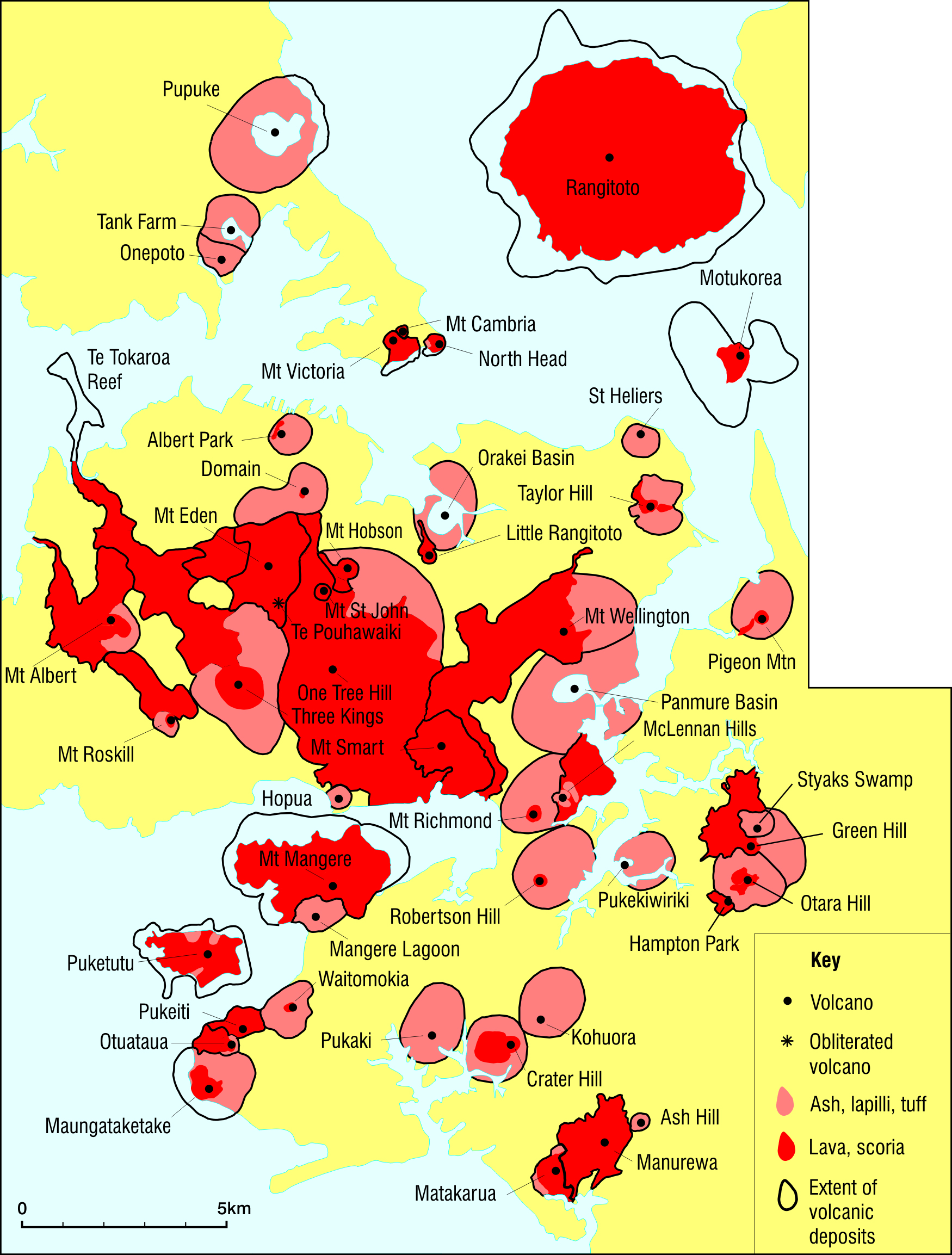
      Decoding a diagram of Auckland volcanoes and teacher demonstration of how to use a ‘key’ here.

      Captions to animate here.

      Example created by class here, if you want to see one.

      Video of class completing this learning sequence here.


      Gamified writing about an Auckland eruption

      Instructions for this activity here.


      Links to examples from the class here

      Prizes given out one Friday afternoon for all students who scored over 20.


      3 minute vocabulary test.

      Share - Publish

      Comparing pretest to post test vocabulary.

      Students were given the same instructions for both tests;
      simply “you have 3 minutes to write down as many words relating to volcanoes
      as you can.” I encouraged them to keep it a secret from their neighbour and
      to just use their brains. I tried to turn it into a bit of a game!

      Three minutes was the perfect amount of time. Some had run out of words and
      only a few were still writing furiously at the end, and that only happened in the post-test!

      I also took some Kahoot data near the start of my interventions - after the interactive reading:

      Kahoot scores from the middle (including literacy questions about the Lake Taupo interactive reading):

      Interestingly, Student 2 only scored 41% in the kahoot. Student 2 did not enjoy the
      interactive reading activity before the kahoot at all (questions were based off the
      reading), but DID appear to enjoy the other interventions, particularly the crossword
      that linked vocabulary to definitions and the feedback from me that went along with that.
      I guess that speaks to the need to revisit content over a longer period and in different ways.

      Student 2 has made the biggest vocabulary shift in both quantity and quality of
      volcanic vocabulary (as you will see), but their kahoot score indicates most of the shift
      happened after this interactive reading.

      Click here to open the comparison of pre and post test data.


      TLDR summary of data: so far 2 students have improved in both quantity and quality of volcanic vocabulary. The other 2 have dropped slightly in quantity and the quality of words remained the same; they omitted some from pre to post test but replaced them with roughly-equivalent quality scientific volcanic vocabulary. Two more results weren't collected due to extended absences.

      Monday, 12 November 2018

      Create - Try New Things

      The first thing I tried that I would not usually do is spend an entire 50 minute period NOT learning science
      but instead trying to HOOK students to the topic!


      3 minute vocabulary test - data on paper. I will compare this to a similar test done at the end.


      Interactive Reading

      I created a text based on the transcript of this video here, and then I went through and made a few 
      volcanic vocabulary tweaks. Next I made an “interactive reading guide” to accompany it, which included 
      instructions on HOW to read the text. This included instructions for things like scanning the text at the 
      start for clues in the title, bold words and images before making a prediction about what they might learn 
      in the text. It also included how many paragraphs to after they had done that and then where to stop, 
      mini-activities like drawing a sketch for four of the sentences, to stop and watch a video to watch at a 
      certain point, to summarise a paragraph, find evidence in the text for the meaning of two words (one 
      volcanic, one not), questions to answer after a paragraph and then to share their answers in pairs etc. 


      This is my reflection from that activity:

      ~ It was glorious, three girls in particular were engaged throughout. They did some extra research and 
      reading about taniwha of Taupo and found images of carvings of the guard dogs. They also found 
      another guardian carving of the lake. 

      ~ Other students in the class engaged well with the visual of the video supporting the text and said 
      things like ‘woooaaah’ when they saw the mountain collapse and the lahar powering through.

      ~ This is the second time I’ve made the class do a large reading and it worked 100x better in pairs rather 
      than in when we did readings groups of 4 with the clarifier and questioner roles etc. 

      ~ The interactive reading prompts seemed to be set at appropriate levels for this class.

      ~ There were three students in particular who didn’t really engage as much as the others; two were 
      having an “off” day and one is difficult to engage, but it’s wonderful to see when they do!

      ~ Taking a full double to really engage with the text definitely paid off. 


      Vocabulary Instruction

      The research I got this from said my natural instinct might be to front load students with definitions and 
      to be honest I nearly did. But I caught myself in time and instead I included gifs and videos in the 
      document before each definition to illustrate the vocabulary (and hopefully pique their curiosity) before 
      they read about it. The next step was to complete a crossword (solving the clues, using the vocab).


      This is my reflection from that activity:

      ~ I definitely delivered this activity wrong. I gave students both the volcanic vocabulary document AND 
      the crossword at the same time - foolish! As one student pointed out, “Miss you should have just given 
      us the document first.” 

      ~ Students were in a rush to answer the crossword and didn’t have the skimming/scanning strategies 
      available to flick back and forth between the crossword and the document full of answers. 

      ~ The three students who were not at all engaged by the interactive reading were FAR more engaged 
      during this activity. 

      ~ Most boys seemed to tolerate both activities but didn’t really “get into” either of them so far.

      ~ One student requested that next time it be a wordfind not a crossword, so I need to think of a way to 
      upgrade the learning value of a wordfind. Maybe matching found words to definitions!


      Physically modelling the relationship between vocabulary in a story

      This one didn’t really involve a literacy strategy specifically described in my literature review -  the 
      activity was to animate the concept of a hotspot; they had to interpret the volcanic vocabulary given to 
      them in ‘captions’ and model it in a play-doh animation.


      My reflection from this activity:

      ~ This activity would have gone better if I had one more lesson previously to establish some
      understanding of hotspots. As it is I tried to squash this into one lesson; a quick video about hotspots, a
      diagram showing all of Auckland’s 52 volcanoes to amaze them and link the video to their lives, and then
      I explained it all again. 

      ~ Then I had to deliver some technical instruction around how to physically make an animation and what 
      the expectations for that were, which chewed up more time; we watched a video I’d previously made for 
      Y11 about stop-motion animations and I showed them examples of hotspot animations from previous 
      years. 

      ~ Students were definitely engaged during this lesson but there wasn’t enough of me to go around. 

      ~ Some groups required more guidance and time than I could give them, so consequently not all groups 
      finished their animated interpretation of the captions I’d given!

      ~ This one engaged the boys a lot more, but they required a lot of support and I didn’t get to help all of 
      them.


      Gamifying writing

      I got this literacy strategy from Matt Goodwin (Pt England Primary) after a discussion on literacy 
      instruction. He suggested turning writing into a competition and assigning words or language features 
      points or deductions. He also clarified for me what a narrative, recount, and explanation were, and said 
      that the best writing in the real world is a combination of all of them. 

      This activity does also involve something that I took away from Dr Jannie van Hees’ second COL 
      presentation; to get students to really focus in on one thing when they watch a video or do a task. I 
      turned off the light, cranked up the volume and got students to watch an animated volcanic eruption in 
      Auckland three times; first to think how they would describe what they saw and felt using adjectives, then 
      to focus on how they would describe what they saw using scientific vocabulary, then finally to think about 
      the processes happening under the ground that they couldn’t see. Then I got them to write a short story 
      describing the eruption; they could earn points for different writing features and vocabulary that were 
      included.


      My reflection:

      ~ Everyone seemed to enjoy this activity, bar one boy. One of the other boys who had been disengaged 
      in other activities jumped right on board this one as it involved blogging, which I’ve noticed he’s both 
      good and prolific at - he’s had almost 5000 visitors to his blog! 

      ~ The one boy in particular who did not engage is consistently resistant to getting started on work, and 
      this is a trend in his other classes as well. Hopefully a culture of writing and learning can be built in the 
      class and he gets swept up in it. Positive peer pressure for learning!

      ~ Lots of students asked me to check their writing as they were going; they were both proud of what 
      they’d come up with and wanting feedback on how to include more of the vocabulary/score higher points.

      ~ Students had read my comment/their score on their blogs by the time they arrived in class the next 
      day!

      ~ One student mentioned she had also visited other students’ blogs; particularly the boy who had beaten 
      her by one point in the competition!


      3 minute vocabulary test in exactly the same conditions as the pre test - the same desk layout, the same
      refill paper, the same thick colourful pens, the same simple instructions, the same timer projected on the
      board, the same prompts to hide their work and encouragement “just keep going!” as they started to fade
      at the end. Then I let them do a summary crossword of the entire topic at the end, because they had
      enjoyed that. We went through the answers at the end.

      Sunday, 11 November 2018

      Create - Make a Plan

      Today I’m sharing a graphic of my first round of interventions.

      As I go through my inquiry the first half of the bubbles will remain the same (because my achievement challenge and outcomes are the same), but the interventions, measurable outcomes and ‘what it looks like’ will change..


      Click here to open the image above. Inside it notes the interventions include:

      Interventions Round 1:

      • Paired reading.
      • Interactive/guided reading of scientific texts with cultural links as well.
      • Revision kahoot after the reading.
      • Vocabulary instruction and crossword.
      • Modelling of the relationship between new vocabulary.
      • Gamification of writing about a volcanic eruption.

      Friday, 2 November 2018

      Learn - Reflect

      Literacy tests used in Manaiakalani and why I can’t use them in my inquiry

      STAR tests - Supplementary Test of Achievement in Reading.
      e-asTTle tests.
      PAT reading.
      SEA - Writing Vocabulary. In 10 minutes how many vocab words can you write down on a piece of
      paper? It’s a measure of fluency - do you need to devote time to work it out or can you just “go”?

      These are all legitimate measures of reading and writing that are pretty universally accepted in NZ
      and in the case of PAT, around the world.

      However for me they are not useful to measure improvement of literacy in science (hopefully caused
      by any intervention that I do) as I only see my year 9 students three times a week for a total of 200
      minutes! That means they are spending a heck of a lot of time with other teachers; in English, reading
      for 20 minutes a day during the school’s AR programme, and then of course there’s all the time at
      home where students could be doing anything at all - they could be reading novels for 5 hours a day!

      I need to come up with my own measures of scientific literacy!

      I'm thinking about 3 minute scientific vocabulary tests or 5 minute paragraph writing about a topic -
      leaving it absolutely wide open. I could either give identical instructions for pre and post tests, or even
      return the pre-test at the end to see if they can improve upon it after the intervention.

      Wednesday, 31 October 2018

      Learn - Research - Professional Development

      During the holidays - on my birthday - I went to the WTE National Writing Conference and the keynote in the morning alone was worth getting up early for.

      I took all my notes on a Presentation, which is here for you to view below or view at this link.


      I absolutely have used these sentence-types in class. With the juniors I ran whole lessons around casting sentence types, to try and improve their writing.

      Here's one lesson I ran on precision writing in science - this presentation linked to this set of activities for students.


      The other thing I was absolutely blown away by was the way that we present students their assessment tasks. We've been giving them THOUSANDS of words to decipher and try to work out what to do before they even begin writing the assessment.

      At the writing conference we sat down in groups with a real 1800-word, Level 3 PE task and all tried to work out what it was asking us to do, and how to get Excellence, and which parts were important.

      Then Ian presented us with a single A4-sized task. It had exact word limits and included clear instructions on what students must include to gain top grades. We didn't have to guess what was meant! Why does it have to be a mystery what we want students to do? When he took his single A4 sheet to an NZQA moderators meeting (there were 40 of them there) they were bamboozled - they thought that's what everyone was giving students! The TKI tasks are not meant for kids' eyes!

      Ian said the best way to make these amazing tasks is to write your own Excellence exemplar, and then see how many words you have apportioned to each section of the task. Set students a word count (as they would have in University, anyway!), and provide headings for each section. Provide clearly worded prompts about what to include. You can see two examples of this that he provided, in the presentation above.

      Here is one that I wrote myself for Year 13

      Friday, 26 October 2018

      Learn - Research - Professional Development

      Improving Boys Literacy PD with Joseph Driessen


      First we read this piece of ‘boys writing’ to start with and then we discussed what made this appealing to
      boys in particular;

      The content involved risk-taking and misbehaviour.

      It was humorous and self-deprecating.

      The writing was active and fast-paced; not many wasted words, quite honest and blunt.

      Similes were basic but effective - easy to interpret.


      Next we discussed how would we develop a piece of writing like this; encourage students to write like
      this and then develop their writing.

      Boys preferences and strengths need affirmation.

      Boys can be great writers if they feel welcome (a culture of respect); they will resist and disengage if
      their efforts feel unwelcome.

      Boys ‘like’ conflict, action, overcoming challenges, humor, the unexpected, irony or an alternative
      viewpoint.

      Boys discussions are different to girls’

      Boys enjoyed being coached how to write ‘edgy’ things.


      I talked to two primary teachers about how they ‘coach’ boys writing and whether they agree with boys
      liking conflict and action..

      One recommended reading Des Hunt novels that link to science; a male, humorous writer with science
      embedded.

      Another said that choosing contexts for boys is absolutely key to writing (the teacher chooses images
      she thinks they will find most interest) and just gets them to write about it.

      A small problem; in science we have the contexts given/laid out by the curriculum - in junior science
      there is some flexibility to use current events or twist contexts, but senior science is quite limited.

      The two primary teachers also mentioned they try not to mark too closely against rubrics like e-asTTle
      does because that shuts down creativity.

      Another small problem; in science there are stringent marking criteria, sometimes down to the actual
      individual phrases that must be included in the writing to achieve a certain grade, such as “reaction rate
      increases as there are more successful collisions between particles per second” in the year 11 Acids
      and Bases exam. Meanwhile in senior Biology there are lots of different ways to say the same
      information, and the best writers know the content well enough to “freestyle” in an exam rather than
      freeze when they can’t remember the exact wording of a definition.


      Next we discussed what the features of a good writer in our class are:

      I said “they just start - they’re not hung up on the PERFECT words or way to write to impress the teacher.”

      Vaughn said “some prefer to write plans at the start though and that’s just their style.”

      Vaughn added that the best senior writers all re-read and edit their work.


      Next we learnt that boys need a learning journey with milestones and accountability.

      Introduce a challenging task/journey.

      Give learning journey/outline of task with timelines.

      Use milestones to set short term tasks; every milestone can be given a tick and celebrated.

      Use grids (tick) to get detailed work.

      Be supportive yet demanding.

      Not meeting targets needs to be a big deal.

      Endorse the progress and final destination.


      Then we went through some recent literacy research. Research showed that the socioeconomic status
      of families correlated with the total amount of words spoken to their children (lower SES = lower words
      spoken), and another study found girls are spoken to a lot more often that boys by their parents. Well,
      actually, mothers speak more to daughters and fathers speak more to sons BUT mothers speak more
      in total so girls hear a lot more words than boys by age 5.


      The recent LENA study (2018) found that children who had more two-way conversations correlated
      with higher language scores, comprehension scores and school achievement. The conclusion of this
      was that engaging children in two way conversation is the most powerful way to develop language
      and stimulate cognitive development. I wondered to myself - “could this link to having a reading buddy
      like the one mentioned in the National Science Teachers Association article Improving Science Reading
      Comprehension?”


      Near the end of the session I had a bit of a chat with a teacher next to me from Henderson Intermediate
      - she’s been recording herself read along with a text, so lower-ability readers can read along with her at
      any time. An example of this can be seen here.


      Strategies to include in class:  

      • The opportunity to write freely and safely (in pairs, with an audience they trust) for just 3 or 4 mins.
        • How would you parent your mother?
        • A list of class improvements for the Principal?
        • Let them try to write something funny in just two sentences, judge based class laughs.
        • Anything you would investigate or invent if you could.
        • Should we use genetic engineering to create more food for growing populations?
        • If we had the power with science to bring people back to life, who would you bring back?
        • Which extinct species would you bring back and why?
      • Other science topics they could “freestyle” about:
        • Everybody can do science.
        • Potential research subjects should be told about risks AND benefits of the projects.
        • New technology can change cultural values and social behaviour.
        • Any belief about the world is as valid as any other.
        • Animals should not be used as research subjects.
        • The international community should enforce laws to prevent further global warming.
        • Companies should be allowed to drill for oil in protected wilderness areas.
        • Cloning of humans should be allowed.
        • Funding for future space programs should be reduced.
        • Unwanted, frozen, human embryos should be used for genetics research.

      Use STORIES in class!!! 

      Real life stories and storytelling of real people, or real people in to tell stories, or get some men in to read out loud, or get people in to talk about how they read in their different jobs.

      Give INTERESTING CONTEXTS for writing; one guy dressed up as a pirate and then was really gruff for 5 mins, told kids to get under the desks, and read excerpts from a slave trader’s diary from in history.

      Give safe and respectful OPPORTUNITIES for writing.

      Increasing two-way conversation (GENUINE, NOT teacher-driven, closed-answer questioning) is the most powerful way to develop language.

      Boys need care and consequences; some need more than others. Be firm and fair for boys.

      Build boys up and make them feel like being part of a winning learning team; “in our class we always” and “I expect.”

      And those are all the things I learned during my professional development today, which I feel is quite a lot compared to some other sessions!