Friday, 1 June 2018

Learn - Research - Teacher Voice


I surveyed Tamaki College science teachers to find out what specific learning outcomes they would value students learning in Year 10 from their special subject areas. I had the best response form Jay (our Head of Department and Physics specialist) who contributed learning outcomes for Waves, and also for Electricity and Magnetism. Shirley, Tamaki's other Physics specialist, also logged onto the document and concurred with Jay's suggestions.

The link to the Google Doc is here, and I have included a screenshot of the science departments' responses below:


This will help me shape the year 10 curriculum by including areas from the NZC that teachers feel students need to arrive better prepared in.

Friday, 25 May 2018

Learn - Research - Student Voice - Culture in Science

The survey that I gave to sixteen year 9 students at the end of 2016 revealed some great possible cultural/science connections from the minds of Tamaki College's young people. 

In the survey I asked them: 


While most students wrote 'idk' (student-speak for "I don't know), here are the pearls of wisdom gleaned from the survey:

When asked "can you think of any way that science could include more Maori culture/beliefs into any of their topics?" three students responded. Here are their answers (in exactly their words):
  • We could learn about how Maori people created primitive technology and how they used them.
  • To run a study about something in the culture?
  • We can make Maori traditional stuff into useful equipment. 

When asked "can you think of any way that science could include more links to Pasifika culture/beliefs into any of their topics?" three students responded. Here are their answers (in exactly their words):
  • We can make stronger houses for Islanders at the islands so when tornadoes come they won't have to keep rebuilding it.
  • We could learn about history and things that Polynesian people discovered or invented. 

I will take on board these ideas as I begin to develop the junior curriculum.

Friday, 18 May 2018

Learn - Research - VTaL and Relationships

Hinerau's COL inquiry focussed on the design and implementation of VTaL - visible tracking and learning.

For me, the main takeaway from the inquiry was that students should at all times be able to see where they are, what they've done, and where they're going in the future. Hinerau used Class Project Task Lists to achieve this and she reviewed the tool at the end of 2017.

Students reported the tracking sheets kept them on task and they know what they haven't finished in class and what they're doing the next day - hear feedback from the students here.

This is different to how I've used tracking sheets in the past, which I've used as a way to have quick links to all students' work in one place, track their completion, identify an idea of their achievement, and also ensure that I'm giving regular and equal amounts of digital feedback to all the students in my class.


Students have access to this and can view their progress, feedback, and explore other students' work - but there's no future pathway visible on the tracking sheet. Instead it's available on workspaces.


One thing that is required for VTaL Class Project Task List is that all learning tasks/experiences must be established and laid out at the start of each unit, so students can see their learning pathway and move ahead if they want to extend themselves. This requires a lot of organisation!

If I was to use a VTaL tracking sheet with the new junior curriculum that I will develop it would have to still afford flexibility for students to engage with the curriculum in different contexts; therefore, any tracking sheet would have to match the curriculum rather than a theme, or be general enough to adapt quickly.


An of course Noelene, who is our Tamaki College relationship and behaviour wizard (fairy?) included a mixture of literacy strategies, VTaL tracking and data sharing, collaboration on and offline, choice, and the use of SOLO taxonomy... but the main point I took away from reading her 2017 COL inquiry is the importance of genuine relationships and a connection between school and whanau.

Noelene found that:

  • If data is being collected then it should be shared with students too, and they should have the chance to process and respond to it as well. 
  • Constant reinforcement from the teacher and a consistent message of belief and support from home and school helped to raise Maori learner achievement; whanaungatanga.
  • That all the planning and organisation and thought in the world can go into planning learning but sometimes it's worth just having a bit of fun to re-engage students in their learning!

So my final thoughts as I close down all the 1000 tabs I have open right now is that whatever I do to the junior curriculum after this; whatever SOLO-formatted, literacy-focussed, science-skill-building, integrate-able, thematic, tracked learning programme I design for our year 9's and 10s - there's something that I can't plan for..

The need for a caring, thoughtful, adaptable, fun teacher to be forming relationships with students and guiding them through the junior science programme! Relationships are key and it's not something we can really inquire into and force people to do. The individual teacher will always have a massive impact on our junior students' learning and enjoyment of science.

Friday, 11 May 2018

Learn - Research - SOLO Taxonomy from 2017 COL Inquiries

SOLO Taxonomy was written about in 1982 by Biggs and Collins, but since then Pam Hook seems to have taken the reigns and launched it into classrooms in the 21st Century. SOLO provides a "simple and robust model" to describe different levels of understanding.

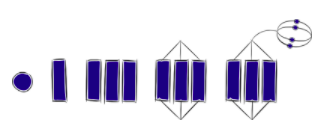
The image below shows prestructural understanding (you don't know much yet and that's ok), unistructural understanding (you know one thing about the concept), multistructural (you know a few things about this idea), relational (starting to understand the links between and across ideas) and finally extended abstract thinking (where you can take what you know and apply it in a new setting, or create something new).


Tamaki's SOLO Queen has to be Karen. She has a whole segment on her blog dedicated to the SOLO resources she's created - both general frameworks and design-specific ones! She also worked with Brent Dunn from the Maori department to design a Tamaki College-style SOLO poster in Te Reo.


One of Karen's earliest activities was to get students first describing at the unistructural or multistructural level, and then she continued on with a Google drawing that made 'describing' at each SOLO level very explicit and clear. I actually found the Drawing in Karen's trash through one of her links - she's obviously moved beyond her earlier attempts and as I continue exploring her 2017 posts I'm sure I'll come across even cooler examples!

Ah here we go! An upgraded model. Karen has removed the 'include evidence' column to streamline student's work process and included a column titled 'target vocabulary' to make her subject-specific vocabulary more explicit.

I can see Karen constantly reflecting as I explore her posts. The one I'm reading at the moment says "I looked at the support I had included on their class site [for evaluating their final poster designs] and decided it was not good enough." Onya Karen, you're so honest! She decided to upgrade the support so students write an analysis at increasing depth of SOLO levels (see image below). Once again she's included key vocabulary explicitly, and also given sentence starters to support lower-ability students.


Karen also used SOLO hexagons (one of Pam Hook's ideas) to collect (multistructural) and get students to identify links between (relational level) her new Year 9's vocabulary around a clock they were analysing.

Noelene also used SOLO taxonomy to break down her Level 1 standards for her learners, such as in the multivariate statistics standard and again in the algebra standard. This made it really clear for students about what they needed to be able to do to achieve, and how a deeper understanding would lead to better grades.

I really like the clarity that using SOLO as a learning framework affords. Students can identify what they can and can't do from the framework, and it also makes 'beginning at the start' acceptable; being at the prestructural level of a concept is normal at the start! The SOLO levels also really nicely align with the depth of thinking and writing required in NCEA for Merit (relational) and Excellence (relational and extended abstract) work.

Friday, 4 May 2018

Learn - Research - Integration from 2017 COL Inquiries

Another thing that some of the COL's inquired into in 2017 was integration across topics, subjects and schools.

Dot did some research at the start of her 2017 inquiry and found:

"The concept of curriculum integration offered by James Beane (1998) involves four major aspects:
  • The integration of experiences uses both past and new experiences to help students understand and solve new problems.
  • Social integration is based on personal and social issues that can be identified in, and developed from, the students’ world. Social integration assists students to apply new ideas and understandings to their daily lives and to the lives of others.
  • The integration of knowledge involves being aware of the ‘big picture’ of learning. When knowledge and skills are connected, rather than fragmented, students begin to see situations as real to themselves and the world they live in.
  • Integration as a curriculum design occurs when students and teachers explore, gather, process, refine and present information about topics they wish to investigate without being constrained to a specific learning area."


Dot continued: 

"One approach which I felt suited our school was the thematic approach.  Because subject content is the starting point for planning, the thematic approach is described as subject-centred. Teachers identify the curriculum content focus and plan how connections will be made.  


On reflection, this approach seemed like the best place for us to start.  It allowed for subject teachers to relate to a theme that they could connect to and therefore base their planning around.  The downside was, it was very teacher focussed and centred."


Dot recognised that each subject is very aware of the short time they have with their students to cover a remarkable amount of curriculum. She mentions: 

"I know each subject area at high school feels that they don't have enough time. So why in the world would you want to have an integrated curriculum when there is never enough time already to do what you have to do?"

Taking these findings on board (as well as the growth of schools such as Hobsonville Point, St Cuthberts y5-9, and Albany Senior High) and considering Dot is now our across-schools COL I feel that integration may play a part in Tamaki College's future, and any changes I make to the junior science curriculum must be able to integrate in a flexible way that doesn't require staff to rewrite entire units or reinvent the wheel with new resources.

Friday, 27 April 2018

Learn - Research - Literacy from 2017 COL Inquiries

The Achievement Challenges and focus on literacy is not a new phenomenon in 2018. In fact, last year's COL teachers had a similar focus as they completed their inquiries. After a year's trying, failing, learning, improving, trying, and sharing, these are the ideas relating to literacy I could take from their inquiries :)

This blog post will focus on literacy strategies shared by 2017's Tamaki College COL teachers.

SOLO hexagons to support concept mapping
This strategy is used by lots of teachers in the school, and is useful to start students discussing key vocabulary and the relationships between the words. Dot used the same vocabulary hexagons repeatedly across three weeks to build her student's confidence and then after three weeks asked students to collaboratively write what they had understood from the activity. You can read about it here.

Reciprocal reading
This is a strategy shared by Aaron Wilson that Dot employed in some of her classes last year. It involves group reading, once the members of the group have been assigned the certain roles to contribute to the reading.

20:6 
In this post Dot asked shared how she asked her year nines to identify 20 keywords from a text, then select the six most important, and then write a summary using those six words.

Using SOLO taxonomy to structure 'summarising' blog posts
In another post Dot shared how she asked students to recall all the information they could from a visitors presentation the week before, and wrote all their ideas on the board. Then the class cut that down to eight key ideas. From there they formulated paragraphs that met the criteria for multi-structural, relational and extended abstract-level writing.

Group brainstorm and sense-making
Dot visited a classroom in Panmure Bridge and observed students "free writing" down any and all ideas they had learnt in the last few days about a topic in groups, on their own corner of a shared A3 sheet of paper. Then the three or four group members compared what they had written and together identified what the MAIN key points were. Students then worked together to reach the common goal of summarising a key point. Dot also noticed that expectations around writing - such as sentence structure, writing frameworks, and word banks were really visible around the classroom.

A writing framework created by our literacy coordinator Marc Milford
Dot implemented Marc's writing framework with one of her classes and found it more effective at helping to motivate the boys in her class to write than the girls. She also noted that boys responded best to digital feedback while girls seemed to prefer having it explained in person.

Chunking
Noelene uses chunking in her algebra unit to help students break questions and tasks down into manageable pieces.

Three level reading guide
Another tool that proved useful (a student articulates the strategy here) is the three level reading guide, where students read 'on the line' at Achieved, 'between the lines' for Merit and 'beyond the line' for Excellence. Reading on the line involves substituting to solve equations, between the lines requires comparing and explaining, and beyond the line is forming their own equations.

Early on in the year Karen identified a lack of vocabulary as holding her students back from being able to analyse, or even just describe, objects. Vocabulary was her major focus. 

Using vocabulary to analyse
Karen planned four lessons focussing on improving the understanding of design vocabulary; first students analysed a poster using these words, then they located different level SOLO words (e.g. describe, analyse) in a reading and turned them different colours, then giving them time to research difficult word definitions on google and select the correct one/ones that made sense in a design context, and finally made a display of the most important subject-specific vocabulary to display on their class wall.

Playing 'Articulate' with vocabulary to practice 'describing'
Karen repurposed the idea of the brilliant boardgame 'Articulate' where people must describe a word or object without saying the name of it.

Reading and highlighting using SOLO levels
Students were instructed to read a text about the Chrysler building and follow instructions to highlight words at different SOLO levels, so students were both reading and also thinking about the structure of their readings.

Getting used to form and sound first
Karen visited another teacher's class and observed the teacher introducing new vocabulary at the start of the lesson and just getting students used to seeing the words and saying them out loud to each other. Later in the lesson, after they learnt the meaning of the words, they were encouraged to use them immediately in context, as often as possible. The teacher also used a '25 word summary' at the end of the lesson, for students to summarise what they had learnt in the last hour.

Collecting prior knowledge and prior vocabulary using SOLO hexagons
Pretty much exactly what it sounds like, see an example of student work here.

Reading more before writing
Karen got students to read model answers and identify key vocabulary before moving on to writing. See the example task here.

Testing comprehension with Kahoot; competitive motivation to read
Before and after reading assessment information Hinerau got students to answer questions on a kahoot and then challenged them to beat their scores by the end of the lesson.

Collaborating on a Google Doc
Hinerau got students to enter questions they had about their upcoming Achievement Standard on a Google Doc and in pairs collaboratively research answers to their own and classmate's questions.

Sorry for my explanations getting shorter at the end there, it's late and it's been a long day!

I forgot to mention Wide and Deep literacy units!
These units were designed by Aaron Wilson and Naomi Rosedale.

The idea behind them is that students engage in reading to gain a deeper understanding of a concept, rather than quickly learning surface information. When they first told me about this I thought "ok, that's cool, but we have rather a lot of content to actually get through each year" (this is still true, I'm already behind with Year 9, but I'm telling myself that it's better they properly understand less different concepts but understand them well rather than meet a lot of concepts only a little as we rush past them).

These reading units involve the selection of a simple scaffolding text, a text that elaborates on the idea, a complimentary text or two, and then a contrasting or controversial text presenting an opposing viewpoint. Students are also encouraged to select and share their own text around a topic. There is also a clearly listed wordbank, so students know what the keywords in the topic are.

Students engage in reading using the group roles mentioned above; this involves a lot of two-way conversation and discussion between students but can be very scary for science teachers, as nothing gets written down and we can only be in one place at a time! It's hard to hand the power over and trust that they will indeed engage with the text and stay on track the entire time. At the end of the unit students ARE required to create and share a DLO to their blogs, demonstrating the depth of their new understanding.

Friday, 20 April 2018

Hypothesise - My Idea for a New Junior Curriculum!


So far I have:

  • Collected junior student voice - year 9's from 2017 reported being 6.2 out of 10 "good at science," and unsure (aka - open to convincing about) whether or not they would take a science during their senior years.
  • Collected the perspectives of young people - year 9 students rated science 7.5 out of 10 "fun" and being 7.1 out of 10 "engaged in class." Students reported that science is "important" - 8.9 out of 10. 
  • Shared anecdotes and student achievement data from senior biology in 2016, which highlighted room for improvement in student preparedness for senior science.
  • Gathered staff voice to find out if this was only the case in biology - teachers thought students were roughly half as prepared as they need to be (5 out of 10), and the junior curriculum was not doing as well as it could. Teachers also mentioned specific areas that could be improved.
  • Looked at student achievement data in senior science back as far as 2015 if it was available, and failed to find a clear trend of improving achievement over time; some years were just randomly better than others.
  • A similar trend was found in Maori student achievement data in senior science; it changed every year and the sample size was small. 
  • This was a key takeaway from my data analysis - not many Maori students have been selecting to take a science in their senior years.
  • I also had a look at the junior e-asTTle reading and writing data (using my class as a random sample) to see what level of abilities our juniors have arrived with this year; only 2 of my class are writing at the national norm and all the rest are reading and writing below national norms.
  • Established that I will focus on Achievement Challenge 1, which is about raising Maori student engagement and achievement by increasing cultural visibility. I will also incorporate the cluster-wide focus on literacy.

My hypothesis is that the junior science curriculum could do with a bit of a shake-up. It currently is only "half" preparing students for senior science (according to teachers) and specific areas of improvement have been mentioned (graphing skills, writing scientific reports, researching, making notes, atomic structure, acids and bases, genetics and cells). Students are reporting they are only 7.1 out of 10 "engaged" during science class, though they know science is "important." Maori students are not often selecting to take senior science for whatever reason (a side-study could be done on this; do they see it as less valuable in their lives, are they less engaged and interested in science, are they less confident?) Another side note is that Tamaki likes to try new things each year and our current sites and resources need to be remade each year, which is tiresome and time-consuming.

There must be a way to develop the junior curriculum so that it can be flexible enough to move with new themes and topics, to integrate with other subjects, and maybe even eventually let students move through it at their own pace and in a form they select. The NZC dictates some of the content we must teach - but we can try to squish it into around into interesting contexts for our students.

I would like to try and design an online curriculum for Tamaki College that is flexible, involves choice, has lots of links between science and culture, or science and our student's everyday lives; includes reading and writing, investigating, and has students learning and then creating as they move through the SOLO taxonomy levels. As I do this I will increase the cultural visibility of science, and have opportunities for improving literacy, and any changes I make will have a broader reach than just changes I make inside my classroom...

Watch this space!